Articles Posted in Environmental

Posted

On November 21, the California Fifth District Court of Appeal issued its decision in Association of Irritated Residents v. Kern County Board of Supervisors, 2017 WL 5590096, a challenge to the County’s Environmental Impact Report (EIR) and approval for modifications at the Alon Bakersfield Refinery. Among other things, the Association of Irritated Residents (AIR) claimed that, since crude oil processing was shut down when work on the EIR began, the EIR should have considered the refinery’s inactive condition as the “baseline,” treating impacts of resuming typical operation as impacts of the new project. Rejecting AIR’s argument, the court held that, since refinery operations fluctuated over time, the use of data from operations in a representative prior year to identify the baseline level of activity was appropriate under the California Environmental Quality Act (CEQA). Continue Reading ›

Posted

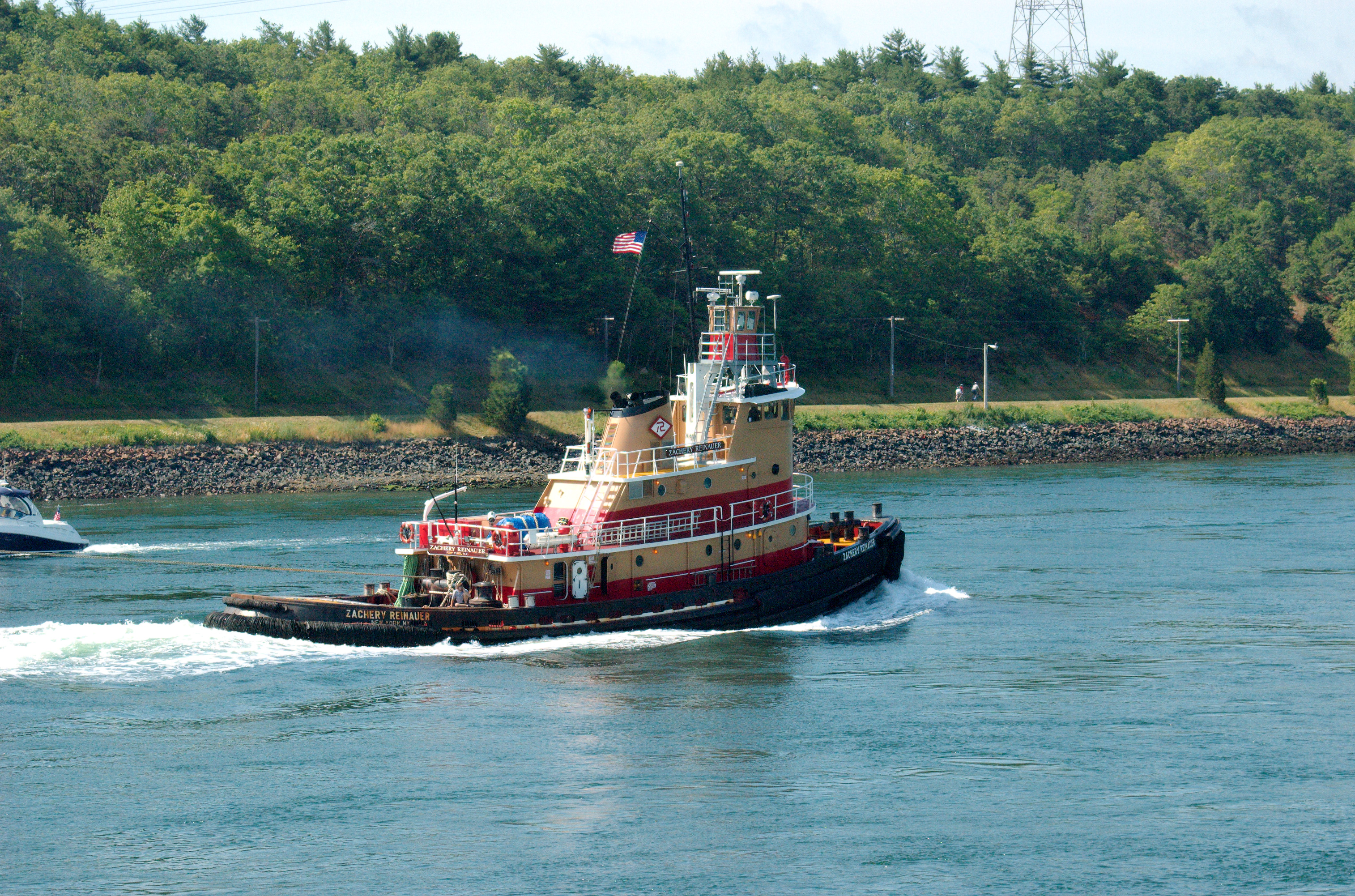
On November 7, in U.S. v. American Commercial Lines, LLC, the U.S. Court of Appeals for the Fifth Circuit affirmed the District Court’s ruling that American Commercial Lines (ACL), the owner of a tug boat whose tug-boat-300x198contracted crew’s actions caused a massive oil spill in the Mississippi River, cannot rely on the Oil Pollution Act’s (OPA) third party defenses to avoid paying the U.S. Government another $20 million to reimburse the government’s response costs, and otherwise it was not entitled to limited liability because of the nature of the conduct of the operator’s employees.

There is no dispute that the July 23, 2008 spill was caused by [DRD Towing Company’s (DRD)] wrongful conduct and regulatory violations, committed in the course of carrying out its contractual obligation to transport ACL’s fuel-filled barge. Accordingly, the spill was caused by the gross negligence, willful misconduct or regulatory violations of ‘a person acting pursuant to a contractual relationship with’ ACL, and ACL is therefore not entitled to limited liability.

Continue Reading ›

Posted

On November 2, the U.S. Court of Appeals for the Ninth Circuit issued its long-awaited ruling in Ecological Rights Foundation v. Pacific Gas & Electric Company, which clarifies the Resource Conservation and Recovery Act’s (RCRA) Section 1006 anti-duplication provision that can play a key role in RCRA enforcement actions. The Ninth Circuit reversed the District Court’s ruling and remanded the matter to enable the District Court

“to consider EcoRights’ arguments with respect to the stormwater pathway that the relevant wastes are “solid wastes” and that PG&E’s actions present an imminent and substantial endangerment to health or the environment under RCRA.”

Continue Reading ›

Posted

On October 25, the U.S. Court of Appeals for the Ninth Circuit vacated the Dan Calver Wallen’s conviction for killing three grizzly bears in violation of the Endangered Species Act, 16 U.S.C. §§ 1531 et seq. (ESA). The case was remanded to the Magistrate Judge to give the defendant an opportunity to establish his defense. The case is U.S. v. Wallen.

Continue Reading ›

Posted

In compliance with the March 28, 2017 Presidential Executive Order on Promoting Energy Independence and Economic Growth (EO 13783), the Environmental Protection Agency (EPA) has released its Final Report on Review of Agency Actions that Potentially Burden the Safe, Efficient Development of Domestic Energy Resources Under Executive Order 13783. EPA describes its efforts to reform the New Source Review (NSR) review process, the National Ambient Air Quality Standards (NAAQS)process and how it plans to assess the economic consequences of actions taken under the Clean Air Act (CAA), the Clean Water Act (CWA), the Resource Conservation and Recovery Act (RCRA), the Comprehensive Environmental Response, Compensation, and Liability Act of 1980 (CERCLA or Superfund).and the Toxic Substances Control Act (TSCA).

Continue Reading ›

Posted

On October 19, 2017, the U.S. Department of Transportation (DOT) released a draft Strategic Plan (the Plan) for public comment. The Plan establishes goals and long-term objectives for increasing investment and streamlining federal environmental review and approval of transportation infrastructure projects over the next five years (Fiscal Years 2018-2022). Comments on the draft Plan are due by November 13, 2017.  Continue Reading ›

Posted

On October 10, the U.S. Court of Appeals for the Sixth Circuit issued an opinion affirming the conviction of a “land man” for the crimes of conspiracy and mail fraud in connection with a scheme to defraud investors he enticed to invest in plan to mine “blue gem coal.” The case is U.S. v. Phillips.

According to the Court of Appeals “[l]and men scout rural property for coal mining potential and negotiate leases with the landowners to mine it.” As a land man, the Mr. Phillips’ job was to search for rural properties with coal mining potential, and then to negotiate leases with the landowners. According to the Court of Appeals, blue gem coal is a very valuable commodity, but applicable state and federal environmental regulations make it difficult to mine.

New Century Coal, the company that employed Mr. Phillips, purported to own land on which valuable deposits of blue gem coal were located, and with the services of a former NASCAR driver, the defendant participated in a plan to defraud investors to invest in the company which did not, in fact, own any such valuable lands.

The Court of Appeals states in its opinion that the company “has swindled more that $14 million from more than 160 investors.” “The government accused twelve people of being in on the scheme. Most of them, including the mastermind, Brian Rose, pleaded guilty. Only Johnny Phillips went to trial. The government charged him with three crimes: conspiring to commit mail and wire fraud, conspiring to launder money, and laundering money.” In his defense, Mr. Phillips argued that he was not aware of the fact that the company had not secured the rights to mine this coal, and that he found nothing suspicious about his accomplices and their use of fake names. The case was argued on October 5, 2017, and decided on October 19, 2017.

Posted

On October 11, the U.S. States District Court for the District of Columbia issued its latest ruling on the Dakota Access Pipeline (DAP). The case is Standing Rock Sioux Tribe and Cheyenne River Sioux Tribe v. US Army Corps of Engineers and Dakota Access, LLC. Partial relief was granted by the District Court when it was convinced that the U.S. Army Corps of Engineers’ (Corps of Engineers) Environmental Assessment inadequately addressed the consequences of an oil spill, and certain environmental justice issues.

Continue Reading ›

Posted

California has taken a significant step in aligning its procurement expenditures with its vanguard climate change policy. On October 15, 2017, Governor Jerry Brown signed A.B. 262, the Buy Clean California Act (Chapter 816, Statutes of 2017). Beginning in 2019, the state’s Department of General Services (DGS) is to establish maximum carbon emission levels for “eligible building materials,” consisting of carbon steel rebar, flat glass, mineral wool board insulation and structural steel. At that time, state agencies may only award contracts to bidders certifying that their sources of these materials meet the standard.

This legislation was supported by manufacturers that have invested heavily in emission reduction processes, along with labor unions and environmental organizations. The Brazilian firm Gerdau Steel, having made expensive upgrades to the only California steel mill and its other facilities, greeted the signing by saying the act will “level the playing field” against sources that have greater emissions from manufacturing and transportation.

Continue Reading ›

Posted

Last week, the U.S. Supreme Court heard oral argument in two significant cases: Nat’l Assoc. of Mfr. v. Dep’t of Defense and Jesner v. Arab Bank, PLC.

In National Association of Manufacturers, the Court is being asked to determine which court is authorized to review the recent redefinition of “Waters of the United States” promulgated by the Environmental Protection Agency (EPA) and the U.S. Army Corps of Engineers (Corps of Engineers). The relevant statute is 33 U.S.C. § 1369(b)(1) and (2), and it is notorious for its complex provisions. If jurisdiction lies in the federal district courts, then many lawsuits are likely to be filed in courts throughout the country, creating uncertainty and stretching out the effective date of the new rule. If jurisdiction is limited to the courts of appeal, this should reduce the cost of litigation, but may be contrary to other provisions of the Clean Water Act (CWA).

Continue Reading ›